







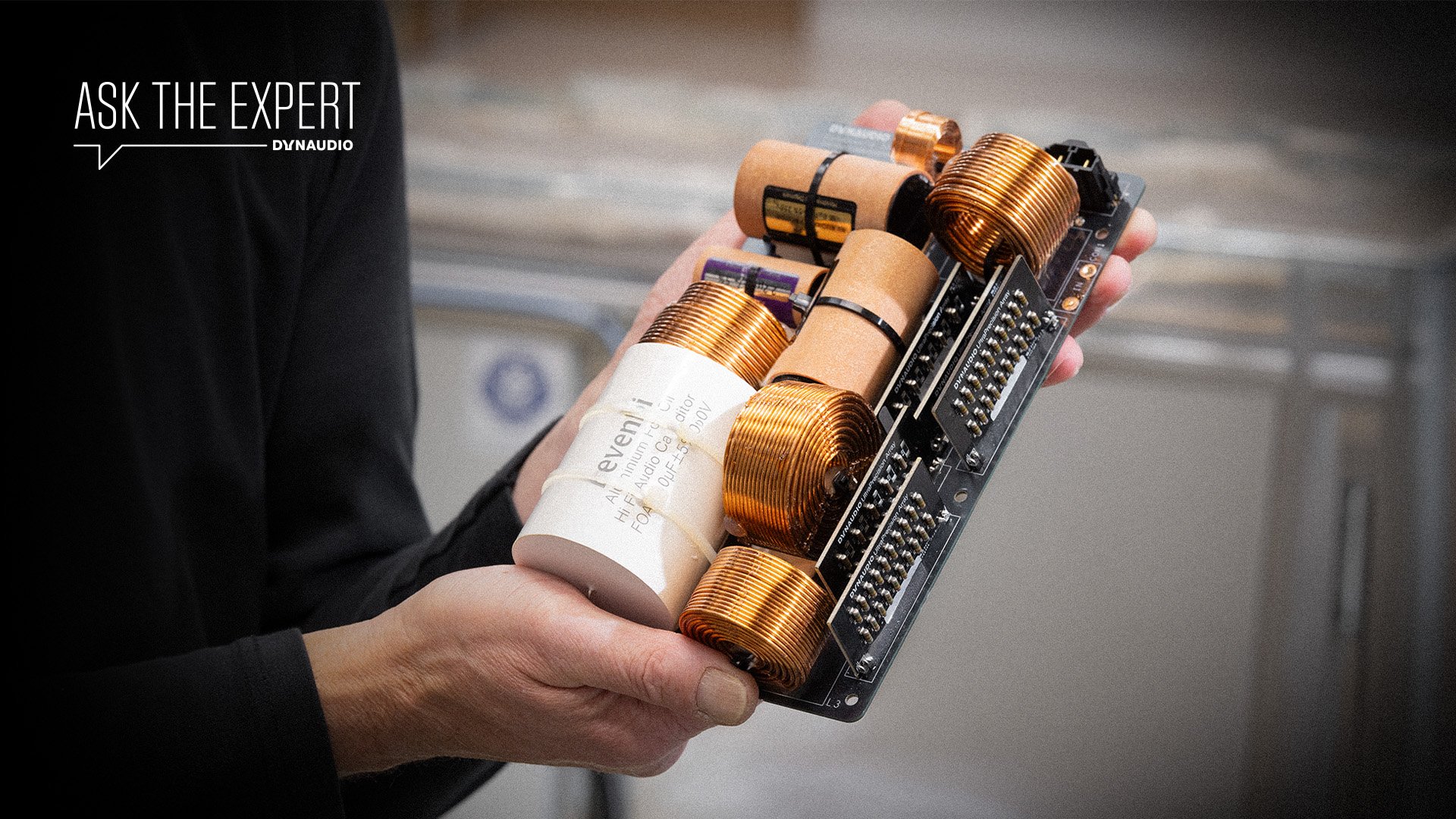

On this episode of Ask The Expert, Otto Jørgensen guides us through the main components of a passive loudspeaker crossover, including what they do and how they affect an audio signal.
In order to keep the Ask The Expert concept alive, we need your help. So keep sending us your hi-fi-realted questions and keep inspiring us to make new episodes of ATE! You can send your questions to Otto and the team via the form at the bottom of this page.
What's in a crossover?
Have you ever wondered what the components in a loudspeaker crossover actually do? My name is Otto Jørgensen, I'm head of Dynaudio Academy an d this is Dynaudio's Ask the Expert.
All passive crossovers consist of three basic types of components. An inductor, a capacitor and a resistor. Let's go into detail about what each of these components actually does.
Inductor
An inductor reduces the high frequencies of an electrical current passing through the it. How high a frequency and inductor cuts, in other words, the frequency at which he roll-off happens, depends on the value of the inductor.
Capacitor
A capacitor comes in various shapes, sizes and qualities. When you pass the electrical current through a capacitor, it cuts the low frequencies. Again, how much gets cut – the frequency of the cutoff – depends on the value of the capacitor.
Resistor
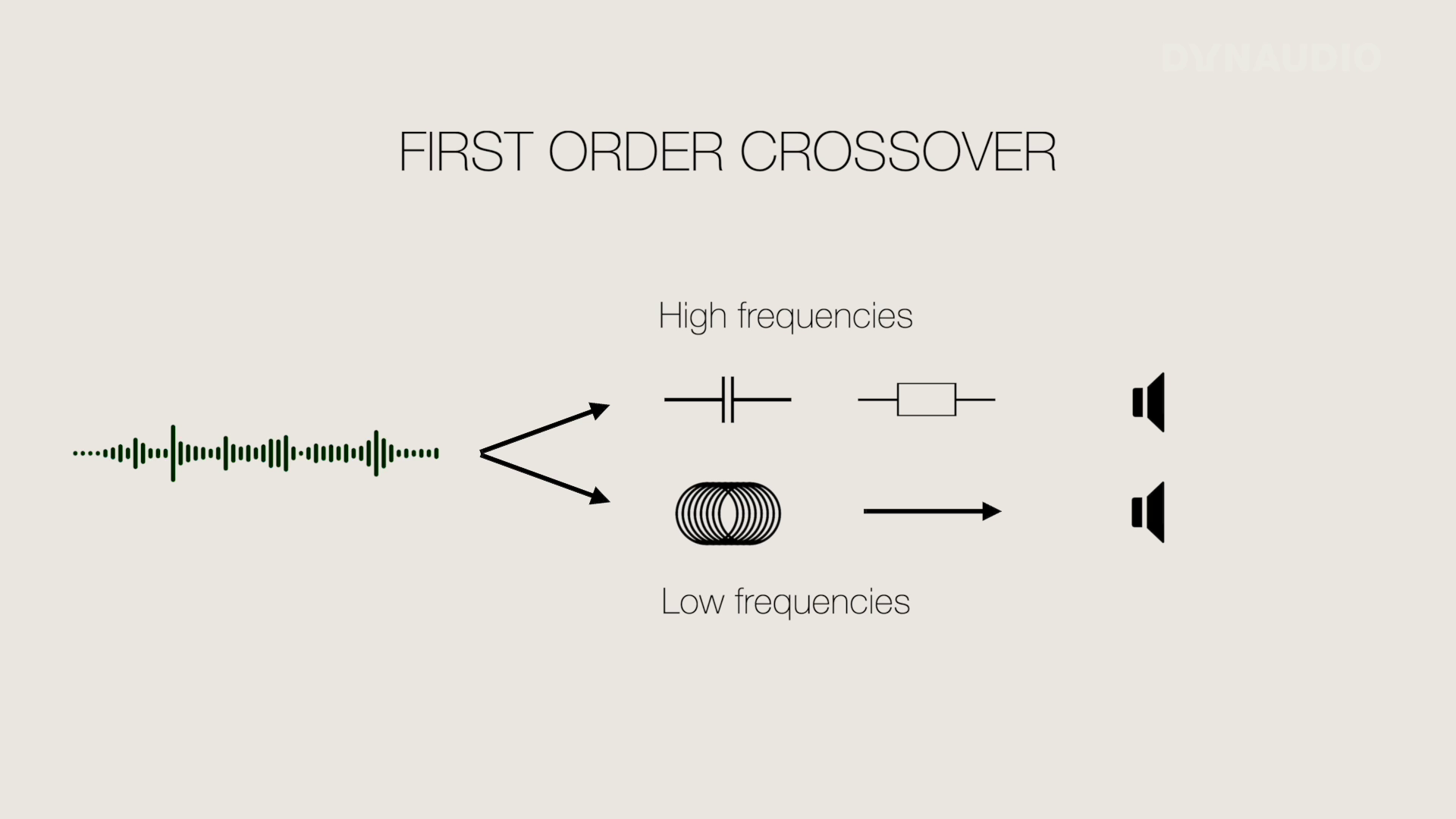
Finally we have the resistor which decreases the overall volume of all frequencies at the same time. These three components together form the basis a loudspeaker crossover… the inductor coil for the woofer, the capacitor for the tweeter and a resistor to pad down the overal volume of the tweeter because it typically has a higher sensitivity than the woofer.
This is what we call a first order crossover, as illustrated below.
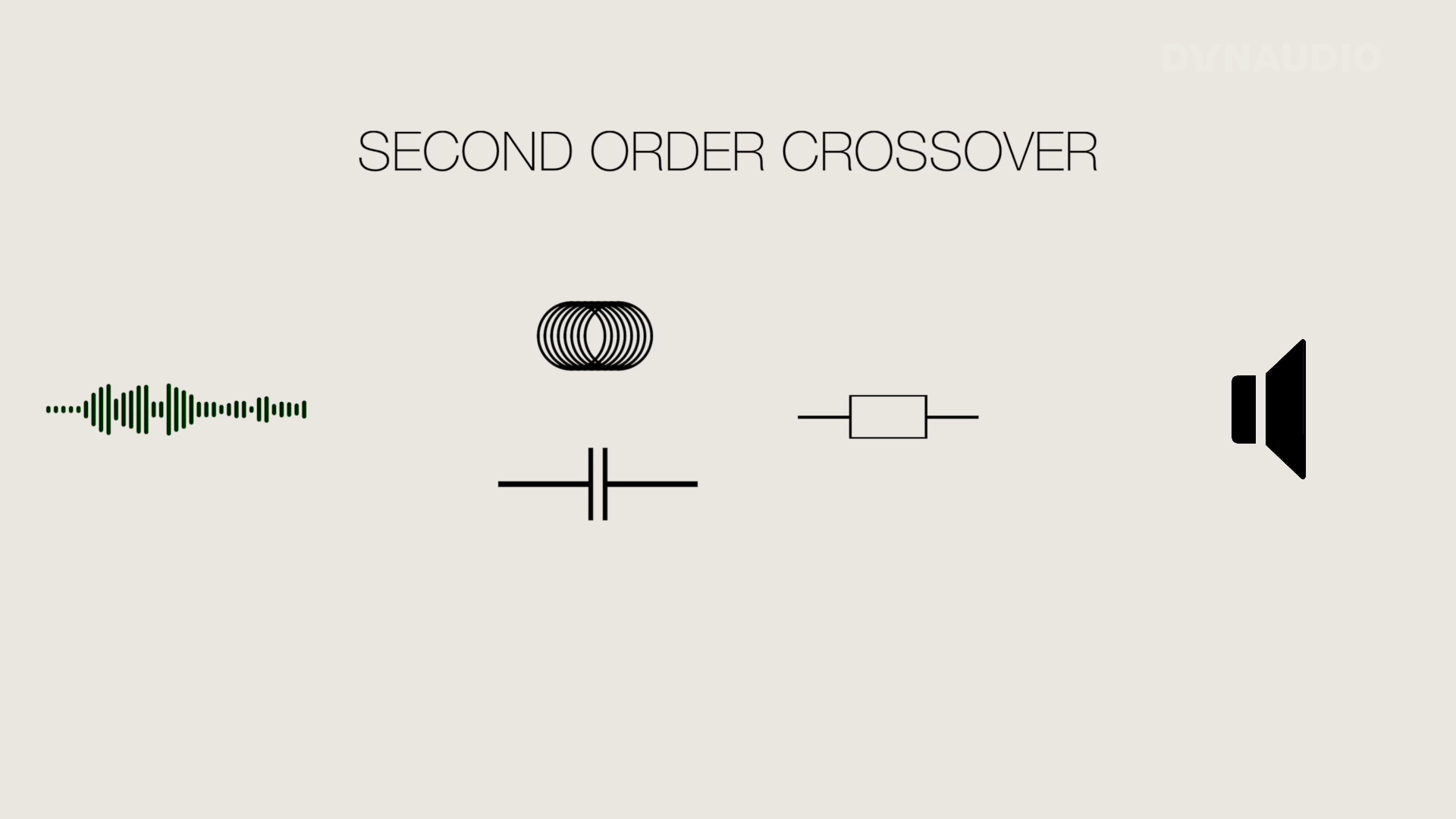
Let's now take things up a level. We know that an inductor placed in series cuts high frequencies, but if you take a capacitor and instead of putting it in series, you put it in parallel (see below) it will cut the high frequencies even more.
This happens because now the current going through the capacitor which cuts low frequencies, creates a short circuit in the amplifier, so that that current does not actually reach the driver – decreasing the high frequencies going to the driver even more. We call this a second order crossover.
We can do the same thing with the inductor. Just as we put the capacitor in parallel with the tweeter, if we put an inductor in parallel with the tweeter, once again, we will increased the high roll off even more.
Conclusions
By increasing the complexity in how we are combining these different components and the different values of these components, we can create more complex filters like third order or fourth order filters. We can also build specific circuits that can be used for EQ filtering, phase alignment, impedance correction and so on. In this way we can build fairly complex loudspeaker crossovers using the same three basic components.
There is not one crossover design that is best for all loudspeakers. Instead, it's important that the specific crossover design is matched to the specific loudspeaker driver. One of the benefits of designing and manufacturing our own speaker drivers is that we can design crossovers that have less impact on the fidelity of the sound.
Send us your questions
Don't forget to submit your questions to our experts via the form below – they might just get featured in a future episode of Ask The Expert!